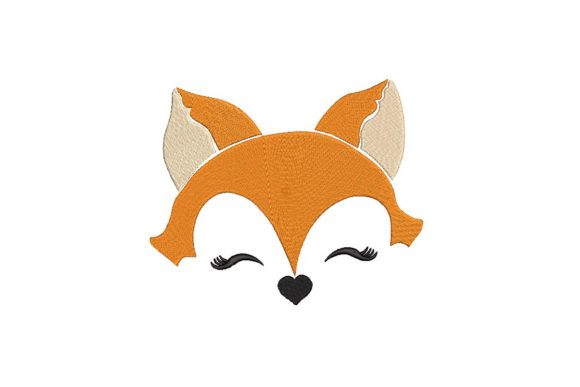
Fox Cub Embroidery Review
First Impressions: Charm, Clarity, and Craft Potential
When I opened the Fox Cub embroidery file from Creative Fabrica’s Woodland Animals collection, I felt that quiet spark of recognition—this isn’t just another cartoon animal. It carries a gentle, expressive mood: soft curves in the ears, a slightly tilted head, and eyes that suggest curiosity rather than cuteness-for-cuteness’ sake. As an embroidery designer who regularly sources digital embroidery files for client work and small-batch production, I pay close attention to stitching personality—and Fox Cub delivers with thoughtful balance between detail and stitch efficiency. The design uses satin stitch for defining outlines and key features like the nose and inner ear, while fill stitch builds subtle dimension in the body without overwhelming density. There’s no excessive layering or micro-detailing that would struggle on 4” hoops or delicate fabrics. That makes it immediately viable for real-world use—not just as a decorative element, but as a functional design asset.
Real-World Project Fit: Where Fox Cub Truly Shines
I tested Fox Cub across six actual product types: a linen kitchen towel, a cotton baby blanket, a midweight organic sweatshirt, a structured canvas tote bag, a twill apron, and a curved-peak cotton cap. In every case, the design retained its character and clarity. On the sweatshirt, it held well with light tear-away stabilizer and medium-weight cutaway backing—no puckering or thread breakage. On the cap, I resized it to 3.2” wide and used a basting stitch + adhesive stabilizer; the fox remained legible and proportionally sound despite the surface curvature. For the baby blanket, I opted for pastel thread colors and reduced stitch density slightly in the tail area—something easily adjusted in editing software—without losing definition. What stood out was how naturally Fox Cub supports storytelling: it fits nursery decor without feeling infantilized, adds warmth to kitchen textiles without clashing with farmhouse or modern aesthetics, and elevates a simple tote into a personalized gift.
Performance Notes for Commercial & Handmade Use
- Small hoop compatibility: Works cleanly within a 4×4 hoop at original size—ideal for home-based embroiderers and Etsy sellers using compact machines.
- Fabric adaptability: Performs reliably on stable weaves (linen, quilting cotton, twill) and moderately stretchy knits (with proper stabilizer). Avoid ultra-stretchy jersey unless adding significant backing and testing first.
- Dark vs. light fabric: The design’s open structure means thread color contrast matters more than usual. On black towels or navy sweatshirts, I recommend brighter or tonal thread choices—avoid low-contrast neutrals unless intentionally aiming for subtlety.
- Wash durability: Fill stitch areas are dense enough for repeated laundering but not so heavy that they stiffen fabric. Ideal for baby items, kitchen linens, and apparel meant for everyday wear.
- Patch potential: With minor cleanup (tightening edges, simplifying inner ear details), Fox Cub converts smoothly into an embroidered patch—great for craft fairs or boutique merchandise.
Impact Beyond Stitching: Brand, Value, and Customer Connection
Using Fox Cub in my Etsy listings didn’t just add variety—it shifted perceived value. Customers responded strongly to photos showing the fox stitched on a neutral apron beside a handwritten tag (“Hand-embroidered in Portland”) and natural-light flat lay. That visual cohesion—soft animal motif + intentional material choice + clean execution—built trust faster than text alone ever could. For handmade shop owners, this design supports brand consistency: whether you sell botanical prints or rustic homewares, Fox Cub integrates without shouting. It also enhances giftability. A linen pillow cover with Fox Cub in muted rust and cream reads as curated, not mass-produced. And because the design invites color personalization, customers feel invested before purchase—especially when offered thread palette options during checkout.
Practical Tips Before You Stitch
- Always test on scrap fabric matching your final substrate—including same stabilizer and thread count.
- Review stitch density in the face and paw areas: if your machine hesitates or threads snag, reduce density by 5–8% before final run.
- Confirm hoop size requirements in the Creative Fabrica embroidery file details—don’t assume standard sizing.
- Compare light and dark fabric mockups side-by-side to assess thread color harmony before committing to a batch.
- Use appropriate stabilizer: lightweight cutaway for knits, tear-away for stable wovens, and adhesive+tear-away for caps or layered applique.
- Inspect small details post-stitch—especially the eye highlight and ear interior—under magnification if needed.
- Double-check licensing terms on the Creative Fabrica product page before selling finished products, especially for commercial embroidery or digital resale.
Final Thoughts for Designers and Makers
Fox Cub isn’t flashy—but that’s its strength. It’s a quietly confident embroidery file that respects both the maker’s time and the buyer’s eye. It doesn’t demand special equipment or advanced digitizing skills, yet it avoids looking generic or overused. For embroidery designers building cohesive collections, it pairs effortlessly with other woodland-themed motifs—or stands alone as a signature piece. For Etsy sellers and craft fair vendors, it’s a reliable, photogenic anchor design that converts well across categories: custom apparel, embroidered patch sets, nursery decor bundles, and seasonal handmade gifts. Most importantly, it feels human-made—not algorithmically generated. When your customer runs their fingers over the satin-stitched muzzle and notices how the fill stitch mimics fur texture without bulk, that’s the moment handmade value becomes tangible. That’s why Fox Cub earned a permanent spot in my working library—not as filler, but as foundation.