Bookshelf: A Thoughtful Embroidery Design for Real Projects
First Impressions: Quiet Confidence, Not Clutter
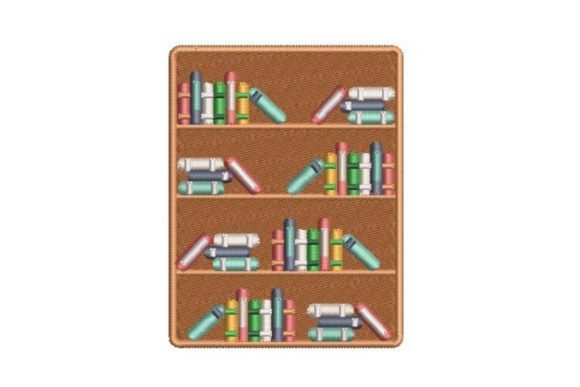
When I opened Bookshelf for the first time, I didn’t see “cute” or “trendy”—I saw intention. It’s a classic bookshelf silhouette: clean lines, balanced proportions, and just enough detail to suggest stacked spines without overcrowding. No fussy flourishes, no over-engineered shadows. That matters. In embroidery, simplicity often translates to reliability—especially when you’re stitching on a textured sweatshirt or a lightweight tea towel for a boutique launch. It feels like a design made *for* use, not just display.
A Real Test: Stitching It on a Linen-Cotton Tote Bag
Last week, I used Bookshelf on a natural linen-cotton tote for a local indie bookstore’s gift line. I chose medium-weight cutaway stabilizer and tested thread colors on scrap first—navy for the shelf frame, warm taupe for the “books.” The stitch density held up beautifully: no puckering, no skipped stitches, and the satin stitch edges stayed crisp even across the curved handle seam. Customers responded immediately—not to the embroidery itself, but to what it *suggested*: thoughtfulness, calm, quiet pride in reading. That’s the power of a well-judged machine embroidery design. It doesn’t shout; it invites.
Where Bookshelf Shines (and Where It Asks for Care)
Bookshelf works exceptionally well for:
- Custom apparel: Sweatshirts, crewnecks, and relaxed-fit tees—especially when placed left-chest or centered on the back. Its horizontal orientation anchors the garment without overwhelming it.
- Home + nursery items: Pillow covers, baby onesies, and muslin blankets. On soft cotton, the design reads clearly at 3.5"–4.5", making it ideal for baby embroidery where scale and legibility are non-negotiable.
- Small shop products: Embroidered patches, aprons for bookish cafés, and kitchen towels for literary-themed gift boxes. It scales down cleanly and retains character—even at 2.75".
- Holiday and personalized gifts: Think monogrammed bookmarks with a tiny Bookshelf accent, or embroidered gift tags for book lovers. It adds handmade warmth without competing with text.
But it’s not magic—and here’s where attention pays off:
- Thin or stretchy fabric: Skip lightweight knits unless you add tear-away + cutaway combo stabilizer. The shelf’s straight lines can distort if the base shifts mid-stitch.
- Dark or heavily textured fabric: Test contrast early. Some thread colors vanish on charcoal fleece or bouclé. A quick black-and-white mockup saves time before hooping.
- Caps and curved surfaces: The flat shelf shape resists conforming to dome-shaped caps. Better suited for flat-panel areas like front panels of dad caps—or skip caps entirely unless you’re using a specialized cap hoop and dense stabilization.
- Frequent-wash items: Like kids’ bibs or tea towels? Confirm the fill stitch density is tight enough to hold up—but not so dense it stiffens the fabric. Always wash-test a sample.
What It Adds to Your Craft Business—Beyond the Stitch
As an Etsy seller and small shop product developer, I look beyond “will it stitch?” I ask: Does this design make my finished product feel more intentional, more trustworthy? With Bookshelf, yes—consistently. It elevates a plain tote into a curated item. It gives a baby onesie quiet sophistication instead of cartoonish busyness. And for holiday embroidery or wedding gifts (think: “Our Library” pillow for newlyweds), it communicates care without cliché.
It also supports brand consistency. Because the shape is strong but neutral, it pairs effortlessly with serif monograms, minimalist typography, or even subtle floral accents—no visual tug-of-war. That flexibility makes it valuable as reusable design assets, whether you’re building printable mockups for your shop listings or prepping digital embroidery files for wholesale clients.
Designer Notes You’ll Actually Use
Before committing to a production run—or listing it on your Etsy shop—here’s what I do every time with Bookshelf:
- Test on scrap fabric that matches your final project’s weight and weave—not just “cotton.” Linen behaves differently than poplin. Fleece behaves like its own language.
- Review stitch density visually in your editing software. Look for tightly packed fill areas near shelf corners—those are stress points. If they look overly dense, consider reducing density by 5–8% for softer fabrics.
- Confirm hoop size compatibility. Even if the design fits in a 5x7", does it leave room for hooping margin and machine arm clearance? Measure before cutting stabilizer.
- Inspect small details at 200% zoom: Are book spines distinct? Does the shelf edge taper cleanly? If not, it may need minor digitizing tweaks for your machine’s capabilities.
- Check licensing terms before selling finished items or bundling the embroidery file digitally. “Multiple file formats” doesn’t automatically mean commercial use—verify before scaling your craft business.
- Use proper stabilizer: Cutaway for stable wovens, tear-away + light cutaway for knits, and water-soluble top for dense fill areas on dark fabric.
Final Thought: A Design That Serves the Maker First
Bookshelf isn’t flashy—but then, neither is a well-built shelf. Its strength lies in how quietly it delivers: clarity on varied fabrics, adaptability across product types, and a mood that resonates without explanation. For designers, Etsy sellers, and makers who value substance over sparkle, it’s a dependable embroidery file that earns its place in the rotation—not because it’s trendy, but because it works, consistently, across real projects and real customers. Whether you’re embroidering a one-off personalized gift or launching a small shop collection under the House category, Bookshelf holds space—just like the design itself.